What a difference 100 years can make.
The Woman Suffrage Parade of 1913 was a march down Pennsylvania Avenue in Washington, D.C. on March 3, 1913, organized by suffragist Alice Paul for the National American Woman Suffrage Association.
The march was scheduled on the day before President Woodrow Wilson's inauguration on March 4, 1913 to "march in a spirit of protest against the present political organization of society, from which women are excluded," as the official program stated.
The march and the attention it attracted were important in advancing women's suffrage in the United States.
The
Nineteenth Amendment (Amendment XIX) to the United States Constitution, which
prohibits any United States citizen from being denied the right to vote based
on sex, was ratified on Aug. 18, 1920
I can't recommend this The Atlantic article and its photos enough: http://www.theatlantic.com/infocus/2013/03/100-years-ago-the-1913-womens-suffrage-parade/100465/
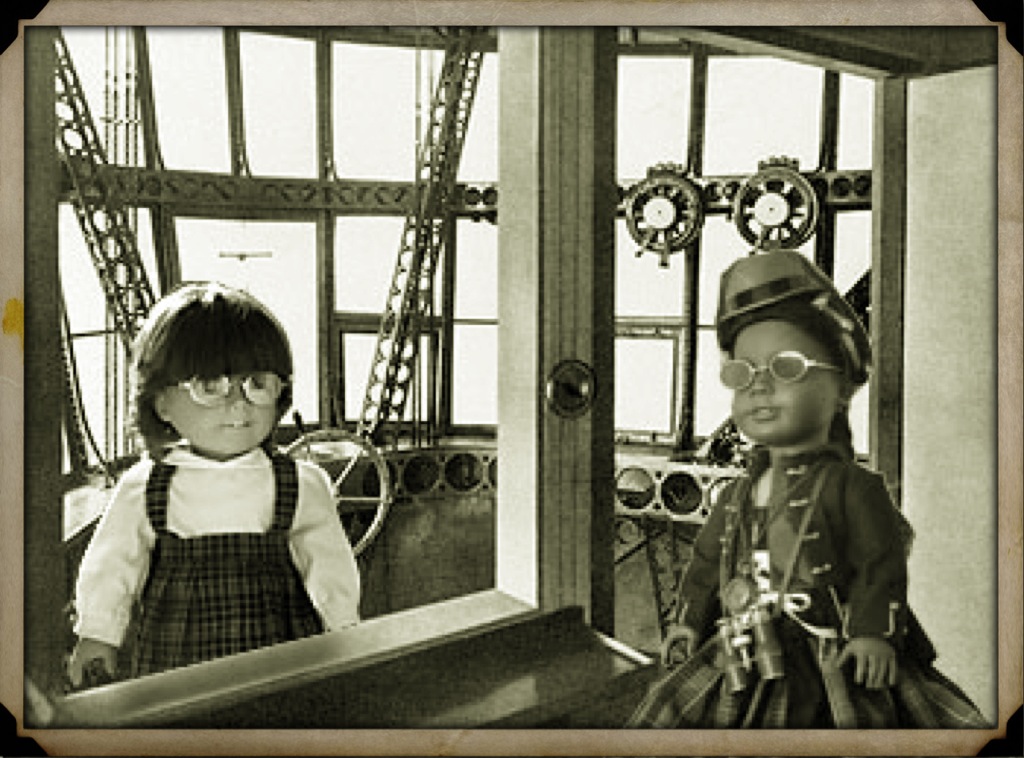
Sadly, my adventures with my dear friend Molly McIntire must come to an end.
For now.
Molly was understandably reluctant to go back to school, but I assured her that her arrival at school would be noteworthy.
So here we are saying our final goodbyes after touching down in front of her school.
Should auld acquaintance be forgot,
and never brought to mind?
Should auld acquaintance be forgot,
and auld lang syne* ?
- CHORUS:
- For auld lang syne, my jo,
for auld lang syne,
we’ll tak a cup o’ kindness yet,
for auld lang syne.
*The song's Scottish title may be translated into English as "old long since."
Hail thee festival day!
At last, a day all about me dolls!
Celebrated annually on March 3, hinamatsuri literally translates as "Doll Festival" but is often referred to as "Girls Day." It is also called Momo no sekku (Peach Festival) because of the peach blossom season.
On March 3, families with young daughters celebrate this event by displaying hina-ningyo, special dolls for the occasion and pray for the happiness and prosperity of their girls, helping to ensure they grow up healthy and beautiful.
The presentation of the dolls can be traced back to the Edo era (1603-1876) when it was used as a way to ward off evil spirits. Now the dolls are displayed out of tradition.
A set of Hina dolls commonly consists of 15 dolls typically wearing the costumes of a Heian Period Imperial Court. They are arranged on a five or seven tier stand covered with red cloth. The Emperor and Empress dolls sit on the top tier. Below them sit two ministers, three ladies in waiting, and five court musicians. The display also includes miniature household articles.
Modest displays may feature just the Imperial couple.
The ceremonial dolls are often handed down from generation to generation. They are brought out for a few days in the best room of the house at festival time, after which they are carefully stored away until the following year.
In addition to displaying hina dolls, special foods are included in the celebration: Hina arare (pastel-colored light rice crackers), hishimochi (diamond-shaped rice cakes with pink, green, and white layers), and Shirozake, a sweet non-alcoholic drink made from fermented rice.
The celebration of Hinamatsuri was brought to the United States by immigrant families where Hinamatsuri is still celebrated by Japanese Americans. Many communities across the United States display dolls or have special programs.
Let's light the lanterns
Let's set peach flowers
Five court musicians are playing flutes and drums
Today is a joyful Dolls' Festival!