Three of my favorite women are being celebrated in The Episcopal Church today, and I learned about a fourth. Gosh darn, that Episcopal Church is smart.
Elizabeth Cady Stanton, Amelia Bloomer, Sojourner Truth, Harriet Ross Tubman:
Four American Pioneers of Black Rights and Women's Rights
The Episcopal Church has added to its Calendar four American women who were pioneers in the struggle for black emancipation and for women's votes. The date chosen for commemorating them is the anniversary of the Women's Rights Convention held in Seneca Falls, N.Y., July 19-20, 1848.
Sojourner Truth (Nov. 26, 1883)
 Sojourner Truth, originally known as Isabella, was born a slave in New York in about 1798. In 1826 she escaped with the aid of Quaker Abolitionists, and became a street-corner evangelist and the founder of a shelter for homeless women. When she was traveling, and someone asked her name, she said "Sojourner," meaning that she was a citizen of heaven, and a wanderer on earth. She then gave her surname as "Truth," on the grounds that God was her Father, and His name was Truth. She spoke at numerous church gatherings, both black and white, quoting the Bible extensively from memory, and speaking against slavery and for an improved legal status for women. The speech for which she is best known is called, "Ain't I a Woman?" It was delivered in response to a male speaker who had been arguing that the refusal of votes for women was grounded in a wish to shelter women from the harsh realities of political life. She replied, with great effect, that she was a woman, and that society had not sheltered her. She became known as "the Miriam of the Latter Exodus."
Harriet Ross Tubman (March 10, 1913)
 Harriet Ross was born in 1820 in Maryland. She was deeply impressed by the Bible narrative of God's deliverance of the Israelites out of slavery in Egypt, and it became the basis of her belief that it was God's will to deliver slaves in America out of their bondage, and that it was her duty to help accomplish this. In 1844, she escaped to Canada, but returned to help others escape. Working with other Abolitionists, chiefly white Quakers, she made at least 19 excursions into Maryland in the 1850s, leading more than 300 slaves to freedom. During the Civil War she joined the Northern Army as a cook and a nurse and a spy, and on one occasion led a raid that freed more than 750 slaves. After the war, she worked to shelter orphans and elderly poor persons, and to advance the status of women and blacks. She became known as "the Moses of her People."
Elizabeth Cady Stanton (Oct. 26, 1902)
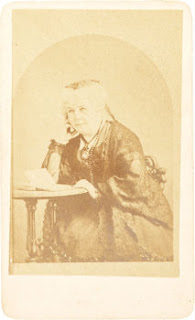 Mrs. Stanton was born in 1815 and reared in the Presbyterian Church. She found the Calvinist doctrine of predestination dismaying, and rebelled against it. She denounced the clergy of her day for not upholding women's rights, but as she traveled giving speeches on the subject, she found no lack of pulpits available to her. She undertook to write what she called a Women's Bible. It never got beyond a series of notes on selected Biblical passages. For example, she quotes the passage in Genesis where we are told that Noah's Ark had only one window, and remarks that if a woman had been consulted, the Ark would have been better designed.
Amelia Jenks Bloomer (Dec. 30, 1894)
 Amelia Jenks was born in New York in 1818, reared as a Presbyterian, and as a young woman became an activist for the anti-slavery, anti-alcohol, and women's votes movements. One of her concerns has made her name a part of the language. In her day, women's fashions encouraged tightly laced waists, involving severe health problems. (The fashions were denounced in 1728 by William Law--see April 9.) The fashion also called for skirts trailing the ground, an arrangement that made it difficult to keep the skirts reasonably clean, especially since the streets were full of horses. Mrs. Bloomer designed a women's costume featuring what are known as Turkish pants, or harem pants, loose baggy trousers gathered into tight bands at the ankles and waist. Over these she wore a mid-calf-length skirt. It seems a thoroughly modest garb, but it excited indignation and ridicule. (At least well into the 1940s, women's underpants, and women's baggy outer pants worn for athletics, were known as "bloomers.")
Mrs. Bloomer and her husband eventually settled in Council Bluffs, Iowa, where she worked to promote churches, schools, libraries, and progressive and reform movements. On one occasion she said:
"The same Power that brought the slave out of bondage will, in His own good time and way, bring about the emancipation of women, and make her the equal in power and dominion that she was in the beginning."
O God, whose Spirit guideth us into all truth and maketh us free: Strengthen and sustain us as thou didst thy servants Elizabeth, Amelia, Sojourner, and Harriet. Give us vision and courage to stand against oppression and injustice and all that worketh against the glorious liberty to which thou callest all thy children; through Jesus Christ our Savior, who liveth and reigneth with thee and the Holy Spirit, one God, for ever and ever. Amen

 The Bill of Rights is the collective name for the first 10 amendments to the U.S. Constitution. These limitations serve to protect the natural rights of liberty and property. They guarantee a number of personal freedoms, limit the government's power in judicial and other proceedings, and reserve some powers to the states and the public.


