Showing posts with label abolition. Show all posts

Saturday, November 17

With malice toward none

I don't know about you, but I can not wait to see the new Lincoln moving picture.

Lincoln is a 2012 biographical war drama film directed and produced by Steven Spielberg, starring Daniel Day-Lewis as the 16th United States President Abraham Lincoln and Sally Field as Mary Todd Lincoln.


The film is based on Doris Kearns Goodwin's biography of Lincoln, Team of Rivals: The Political Genius of Abraham Lincoln, and covers the final four months of Lincoln's life.
In a nation divided by war and the strong winds of change, Lincoln pursues a course of action designed to end the war, unite the country and abolish slavery. With the moral courage and fierce determination to succeed, his choices during this critical moment will change the fate of generations to come.


Have you seen it yet?


Thursday, September 20

When Addie comes marching home (again)

Thimbles and Acorns
I am so excited!

My Bestest Fan (other than blood family!) is making me my very own Grand Army of the Republic Uniform based upon this Thimbles and Acorns pattern!
During the Civil War it was not uncommon for boys as young as 12 years of age to enlist as drummer boys. Though they weren't technically soldiers, they were still close to the battle lines and often took up arms when battles became heated. This uniform is patterned after the standard pants and sack coat issued to enlisted men and is the same style worn by Johnny Clem, who at 9 years of age became the youngest soldier of the Civil War... actually, of any American war.  

This pattern has been carefully researched with close attention to detailing. The pants have a fly front with a small working silver button and two front pockets. The jacket features a unique pocket in the front that is accessed through the front placket. The jacket is fully lined ... just like the original.

Of course we are modifying it so I can wear bloomers instead of pants, just like Mary Edwards Walker did.

Walker was an 19th century American feminist, abolitionist, prohibitionist, alleged spy, prisoner of war and surgeon. She is the only woman ever to receive the Medal of Honor.


Tuesday, June 19

Juneteenth

Today is one of my favorite holidays.

Juneteenth, also known as Freedom Day or Emancipation Day, is a holiday in the United States commemorating the announcement of the abolition of slavery in Texas in 1865.

Although President Abraham Lincoln issued the Emancipation Proclamation on Sept. 22, 1862, with an effective date of Jan. 1, 1863, it had minimal immediate effect on most slaves’ day-to-day lives, particularly in the Confederate States of America.

Texas, as a part of the Confederacy, was resistant to the Emancipation Proclamation and while slavery was prevalent in east Texas, it was not as common in west Texas.

Juneteenth commemorates June 18 and 19, 1865. June 18 is the day Union General Gordon Granger and 2,000 federal troops arrived in Galveston, Texas, to take possession of the state and enforce the emancipation of its slaves.

Legend has it that while standing on the balcony of Galveston’s Ashton Villa on June 19, 1865 , Granger read the contents of “General Order No. 3”:


The people of Texas are informed that, in accordance with a proclamation from the Executive of the United States, all slaves are free. This involves an absolute equality of personal rights and rights of property between former masters and slaves, and the connection heretofore existing between them becomes that between employer and hired labor. The freedmen are advised to remain quietly at their present homes and work for wages. They are informed that they will not be allowed to collect at military posts and that they will not be supported in idleness either there or elsewhere.

Former slaves in Galveston rejoiced in the streets with jubilant celebrations. Juneteenth celebrations began in Texas the following year. Across many parts of Texas, freed people pooled their funds to purchase land specifically for their communities and increasingly large Juneteenth gatherings — including Houston’s Emancipation Park, Mexia’s Booker T. Washington Park, and Emancipation Park in Austin.

As of June 2011, 41 states and the District of Columbia have recognized Juneteenth as either a state holiday or state holiday observance.


Wednesday, April 11

Our whole school for Christ

While telling my Big Sister about the importance of education this morning, I got to thinking about higher education for women and remembered that Spelman College, the oldest college for African-American women in the United States, was founded on April 11, 1881 in Atlanta, Ga.

Spelman College, originally known as The Atlanta Baptist Female Seminary, was established in the basement of Atlanta's Friendship Baptist Church by Harriet E. Giles and Sophia B. Packard and was sponsored by the American Baptist Women's Home Mission Society.

Giles and Packard began the school with 11 African-American women and $100 given to them by a church congregation in Medford, Mass. In 1882 the two women returned to Massachusetts to solicit more money and were introduced to John D. Rockefeller at a church conference in Ohio.

The school relocated in 1883 to a nine-acre site 
in Atlanta which only had five buildings left from a Union Civil War encampment. The school was able to survive on generous donations by the black community in Atlanta, the efforts of volunteer teachers, and gifts of supplies.

In April 1884, Rockefeller visited the school and was so impressed that he settled the debt on the property. The name of the school was changed to the Spelman Seminary in honor of Rockefeller's wife, Laura Spelman, and her parents who were longtime abolitionists. Rockefeller's gift precipitated interest from other benefactors.

Spelman was the first historically black female institution of higher education to receive its collegiate charter in 1924 and is now part of the Atlanta University Center academic consortium.

A four-year liberal arts women's college, Spelman is now ranked among the nation's top colleges by U.S. News and World ReportsForbes Magazine, and Princeton Review.


Tuesday, March 20

Cabin fever

Poor Uncle Tom has gotten a bad rap over the years.

Uncle Tom's Cabin; or, Life Among the Lowly is an anti-slavery novel by Harriet Beecher Stowe. Published on March 20, 1852, the two-volume novel "helped lay the groundwork for the Civil War."

An abolitionist, Stowe featured the character of Uncle Tom around whom the other characters revolve. The sentimental novel depicts the reality of slavery while also asserting that Christian love can overcome something as destructive as slavery.

Uncle Tom's Cabin was the best-selling novel of the 19th century and the second best-selling book of that century, following the Bible. In the first year after it was published, 300,000 copies of the book were sold in the United States; one million copies were sold in Great Britain.

Uncle Tom's Cabin is credited with fueling the abolitionist cause in the 1850s, and it is said that when Abraham Lincoln met Stowe on Nov. 25, 1862, he declared, "So this is the little lady who started this great war." (The quote is did not appear in print until 1896.)

It is my belief that the early plays and moving pictures it inspired popularized a number of stereotypes about black people (usually portrayed by white actors in blackface) and overshadowed the historical impact of the book.

Saturday, December 31

On the seventh day of Christmas

On the seventh day of Christmas
My true love gave to me
Seven swans-a-swimming, six geese-a-laying
Five golden rings, four calling birds
Three French hens, two turtle doves
And a partridge in a pear tree.

President Abraham Lincoln signed an act on Dec. 31, 1862 that admitted West Virginia to the Union, thus dividing Virginia in two. Rivalry had existed for years between the wealthy slaveowners to the East and the poorer miners and hill folk to the West -- divided by the Appalachian mountains. Lincoln admitted West Virginia with the condition for the gradual abolition of slavery. While many felt that West Virginia's admission as a state was both illegal and unconstitutional, Lincoln issued his Opinion on the Admission of West Virginia finding that "the body which consents to the admission of West Virginia, is the Legislature of Virginia," and that its admission was therefore both constitutional and expedient.

Friday, October 7

Happy birthday Tutu you!

Happy 80th birthday, Bishop Desmond Tutu! You are an inspiration to many worldwide.
Watch over thy child, O Lord, as his days increase; bless and guide him wherever he may be. Strengthen him when he stands; comfort him when discouraged or sorrowful; raise him up if he fall; and in his heart may thy peace which passeth understanding abide all the days of his life; through Jesus Christ our Lord. Amen.

Book of Common Prayer
page 830
This biography come from the Nobel Prize website, which he won in 1984:

Bishop Desmond Tutu was born in Oct. 7, 1931 in Klerksdorp, Transvaal. His father was a teacher, and he himself was educated at Johannesburg Bantu High School. After leaving school he trained first as a teacher at Pretoria Bantu Normal College and in 1954 he graduated from the University of South Africa. After three years as a high school teacher he began to study theology, being ordained as a priest in 1960. The years 1962-66 were devoted to further theological study in England leading up to a Master of Theology. From 1967 to 1972 he taught theology in South Africa before returning to England for three years as the assistant director of a theological institute in London. In 1975 he was appointed Dean of St. Mary's Cathedral in Johannesburg, the first black to hold that position. From 1976 to 1978 he was Bishop of Lesotho, and in 1978 became the first black General Secretary of the South African Council of Churches. Tutu is an honorary doctor of a number of leading universities in the USA, Britain and Germany.

Desmond Tutu has formulated his objective as "a democratic and just society without racial divisions", and has set forward the following points as minimum demands:

  1. equal civil rights for all
  2. the abolition of South Africa's passport laws
  3. a common system of education
  4. the cessation of forced deportation from South Africa to the so-called "homelands"
The South African Council of Churches is a contact organization for the churches of South Africa and functions as a national committee for the World Council of Churches. The Boer churches have disassociated themselves from the organization as a result of the unambiguous stand it has made against apartheid. Around 80 percent of its members are black, and they now dominate the leading positions.

I especially thank you for your role in the end of apartheid.

Wednesday, September 28

The Banned Adventures of Huck Finn

It's no wonder Mark Twain laughed at people who read (or claimed to have read) his classic book, Adventures of Huckleberry Finn, and wanted it banned.

Like many of his works, it's a satire.
sat·ire [sat-ahyuhr]
noun 
1. the use of irony, sarcasm, ridicule, or the like, in exposing, denouncing, or deriding vice, folly, etc. 
2. a literary composition, in verse or prose, in which human folly and vice are held up to scorn, derision, or ridicule.
3. a literary genre comprising such compositions.
Twain was an ardent abolitionist who said, “Lincoln's Proclamation ... not only set the black slaves free, but set the white man free also." 

He deliberately wrote Huck Finn to illustrate the evils of slavery and racism. (Huck Finn was published 20 years after the end of the Civil War. Slavery was gone but not racism.)

One example was both Huck and Jim run away: Huck from an abusive father and Jim from slavery. This parallel was to draw attention to the fact that while some thought Huck's running away was perfectly justified, Jim's was not.

Huck Finn was banned shortly after its 1885 U.S. publication in many locations.
As usual, Twain fired back at his critics,
"I am greatly troubled by what you say. I wrote 'Tom Sawyer' and 'Huck Finn' for adults exclusively, and it always distressed me when I find that boys and girls have been allowed access to them. The mind that becomes soiled in youth can never again be washed clean. I know this by my own experience, and to this day I cherish an unappeased bitterness against the unfaithful guardians of my young life, who not only permitted but compelled me to read an unexpurgated Bible through before I was 15 years old. None can do that and ever draw a clean sweet breath again on this side of the grave."
When his book Eve's Diary was banned in 1906 from the Charlton Public Library Twain said,
"the truth is, that when a library expels a book of mine and leaves an unexpurgated Bible lying around where unprotected youth and age can get hold of it, the deep unconscious irony of it delights me and doesn't anger me."
What's funny is that the use of the now controversial N-word was not what made Adventures of Huckleberry Finn controversial back in its day. What made it controversial was Huck actually sweated!

And scratched!

(The proper word would have been "perspired." Uh huh. Obviously the critics hadn't spent much time by the Mississippi River!)

Oh, and as for the above dictionary listing? Did you know the dictionary (the dictionary!) has been banned in some places because it contains words not appropriate for young children?

Kinda makes me want to go read the dictionary next....


Thursday, September 22

I see you shiver with Emanci...pation

One morning, while we were still slaves, Momma woke me by singing:
We can never know about the days to come
But we think about them anyway, yay
And I wonder if I'm really with you now
Or just chasin' after some finer day

Emancipation, emancipation
Is makin' me late
Is keepin' me waitin'
With apologies to Abraham Lincoln's Emancipation Proclamation of Jan. 1, 1863
and Carly Simon's Anticipation song of 1971.

President Abraham Lincoln first discussed the Emancipation Proclamation with his cabinet in July 1862. He believed he needed a Union victory on the battlefield so his decision would appear positive and strong.

The Battle of Antietam, in which Union troops turned back a Confederate invasion of Maryland, gave him that opportunity. Five days after Antietam, Lincoln called his cabinet into session on Sept. 22, 1862 and issued the Preliminary Proclamation.

Lincoln told his Cabinet that he had made a covenant with God - that if the Union drove the Confederacy out of Maryland, he would issue the Emancipation Proclamation.

The Preliminary Proclamation declared that all slaves (with some exceptions) in states that were still in rebellion as of Jan. 1, 1863, would be free. One hundred days later, with the Confederacy still in full rebellion and the nation approaching its third year of bloody Civil War, Lincoln issued the Emancipation Proclamation.

The Emancipation Proclamation also allowed for the enrollment of freed slaves into the United States military. During the war nearly 200,000 blacks, most of them ex-slaves, joined the Union Army. Their contributions gave the North additional manpower that was significant in winning the war. The Confederacy did not allow slaves in their army as soldiers until its final months.

Total abolition of slavery was ratified by the Thirteenth Amendment which took effect in December 1865.


Sunday, August 28

This Week in The Civil War: Sunday, Aug. 28

Grant's rise, a daring proclamation

On Aug. 28, Ulysses S. Grant takes early steps in his ascent to military fame, appointed commander of federal forces for the district of southeastern Missouri at Cairo, Ill., where the Ohio and Mississippi rivers converge. Experienced military officers are in much demand on the Union side early on and Grant will soon be drawing recognition for his ability to fight hard and win battles further west. He will later drive Union victories at Vicksburg, Miss., and battlefields in Tennessee en route to winning command of the Union army and — years from now — forcing the Confederacy's surrender in 1865. This week also brings a startling, unauthorized move by a Union general that rocks Lincoln's government: Major Gen. John Fremont declares martial law in Missouri and orders the state's slaves emancipated. "All person who shall be taken with arms in their hands within these lines, shall be tried by Court Martial, and, if found guilty, will be shot," Fremont proclaimed. The property "of those who take up arms against the United States .. is declared to be confiscated .. and their slaves, if any they have, are hereby declared free men." Fremont's bold order — aimed at reining in a divided border state that hasn't seceded — sets abolitionists rejoicing. But the proclamation oversteps the bounds of President Abraham Lincoln's new confiscation law and Lincoln soon sends a special messenger to have Fremont revise the order. Lincoln is still a few years from announcing his famed Emancipation Proclamation. For now, the president is wary of linking an anti-slavery stance to his war effort in fear of eroding support in slave states that haven't seceded and might be pushed to the Confederate side. Ultimately, Fremont's proclamation will be revoked altogether.


Wednesday, July 20

To boldly go where no women have gone before

Three of my favorite women are being celebrated in The Episcopal Church today, and I learned about a fourth. Gosh darn, that Episcopal Church is smart.

Elizabeth Cady Stanton, Amelia Bloomer, Sojourner Truth, Harriet Ross Tubman:
Four American Pioneers of Black Rights and Women's Rights
 

The Episcopal Church has added to its Calendar four American women who were pioneers in the struggle for black emancipation and for women's votes. The date chosen for commemorating them is the anniversary of the Women's Rights Convention held in Seneca Falls, N.Y., July 19-20, 1848.

Sojourner Truth (Nov. 26, 1883) 
 
Sojourner Truth, originally known as Isabella, was born a slave in New York in about 1798. In 1826 she escaped with the aid of Quaker Abolitionists, and became a street-corner evangelist and the founder of a shelter for homeless women. When she was traveling, and someone asked her name, she said "Sojourner," meaning that she was a citizen of heaven, and a wanderer on earth. She then gave her surname as "Truth," on the grounds that God was her Father, and His name was Truth. She spoke at numerous church gatherings, both black and white, quoting the Bible extensively from memory, and speaking against slavery and for an improved legal status for women. The speech for which she is best known is called, "Ain't I a Woman?" It was delivered in response to a male speaker who had been arguing that the refusal of votes for women was grounded in a wish to shelter women from the harsh realities of political life. She replied, with great effect, that she was a woman, and that society had not sheltered her. She became known as "the Miriam of the Latter Exodus."

Harriet Ross Tubman (March 10, 1913)

Harriet Ross was born in 1820 in Maryland. She was deeply impressed by the Bible narrative of God's deliverance of the Israelites out of slavery in Egypt, and it became the basis of her belief that it was God's will to deliver slaves in America out of their bondage, and that it was her duty to help accomplish this. In 1844, she escaped to Canada, but returned to help others escape. Working with other Abolitionists, chiefly white Quakers, she made at least 19 excursions into Maryland in the 1850s, leading more than 300 slaves to freedom. During the Civil War she joined the Northern Army as a cook and a nurse and a spy, and on one occasion led a raid that freed more than 750 slaves. After the war, she worked to shelter orphans and elderly poor persons, and to advance the status of women and blacks. She became known as "the Moses of her People."

Elizabeth Cady Stanton (Oct. 26, 1902)
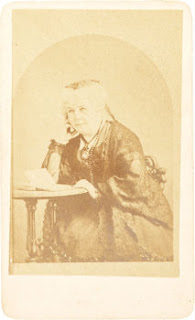
Mrs. Stanton was born in 1815 and reared in the Presbyterian Church. She found the Calvinist doctrine of predestination dismaying, and rebelled against it. She denounced the clergy of her day for not upholding women's rights, but as she traveled giving speeches on the subject, she found no lack of pulpits available to her. She undertook to write what she called a Women's Bible. It never got beyond a series of notes on selected Biblical passages. For example, she quotes the passage in Genesis where we are told that Noah's Ark had only one window, and remarks that if a woman had been consulted, the Ark would have been better designed.

Amelia Jenks Bloomer (Dec. 30, 1894)

Amelia Jenks was born in New York in 1818, reared as a Presbyterian, and as a young woman became an activist for the anti-slavery, anti-alcohol, and women's votes movements. One of her concerns has made her name a part of the language. In her day, women's fashions encouraged tightly laced waists, involving severe health problems. (The fashions were denounced in 1728 by William Law--see April 9.) The fashion also called for skirts trailing the ground, an arrangement that made it difficult to keep the skirts reasonably clean, especially since the streets were full of horses. Mrs. Bloomer designed a women's costume featuring what are known as Turkish pants, or harem pants, loose baggy trousers gathered into tight bands at the ankles and waist. Over these she wore a mid-calf-length skirt. It seems a thoroughly modest garb, but it excited indignation and ridicule. (At least well into the 1940s, women's underpants, and women's baggy outer pants worn for athletics, were known as "bloomers.")

Mrs. Bloomer and her husband eventually settled in Council Bluffs, Iowa, where she worked to promote churches, schools, libraries, and progressive and reform movements. On one occasion she said:

"The same Power that brought the slave out of bondage will, in His own good time and way, bring about the emancipation of women, and make her the equal in power and dominion that she was in the beginning." 

O God, whose Spirit guideth us into all truth and maketh us free: Strengthen and sustain us as thou didst thy servants Elizabeth, Amelia, Sojourner, and Harriet. Give us vision and courage to stand against oppression and injustice and all that worketh against the glorious liberty to which thou callest all thy children; through Jesus Christ our Savior, who liveth and reigneth with thee and the Holy Spirit, one God, for ever and ever. Amen

Friday, July 1

Life among the lowly

Momma and I are Still Vacationing in Prescott but Head Home tomorrow with my Big Sister - Sob! I shall miss this lovely town but hope to come back soon ... maybe for another fitting?

However, it has come to My attention that July 1 is celebrated in The Episcopal Church as the Feast Day of Harriet Beecher Stowe, who wrote the book Uncle Tom's Cabin. You may have heard of it?

Harriet Beecher Stowe (June 14, 1811 – July 1, 1896) was an American abolitionist and author. Her 1852 novel Uncle Tom's Cabin depicted slavery and reached millions as a novel and play. It energized anti-slavery forces in the North, while provoking widespread anger in the South. She was an ardent critic of slavery, and the Stowes supported the Underground Railroad, temporarily housing several fugitive slaves in their home.

So today I beseech you to read Uncle Tom's Cabin, if you haven't already. It may surprise you.

Gracious God, we offer thanks for the witness of Harriett Beecher Stowe, whose fiction inspired thousands with compassion for the shame and sufferings of enslaved peoples, and who enriched her writings with the cadences of The Book of Common Prayer. Help us, like her, to strive for thy justice, that our eyes may see the glory of thy Son, Jesus Christ, when he comes to reign with thee and the Holy Spirit in reconciliation and peace, one God, now and always. Amen.